
 Go Back to Insights
The "First Flush" Guide: Protecting Perth Assets from Autumn Water Damage
The "First Flush" Hazard
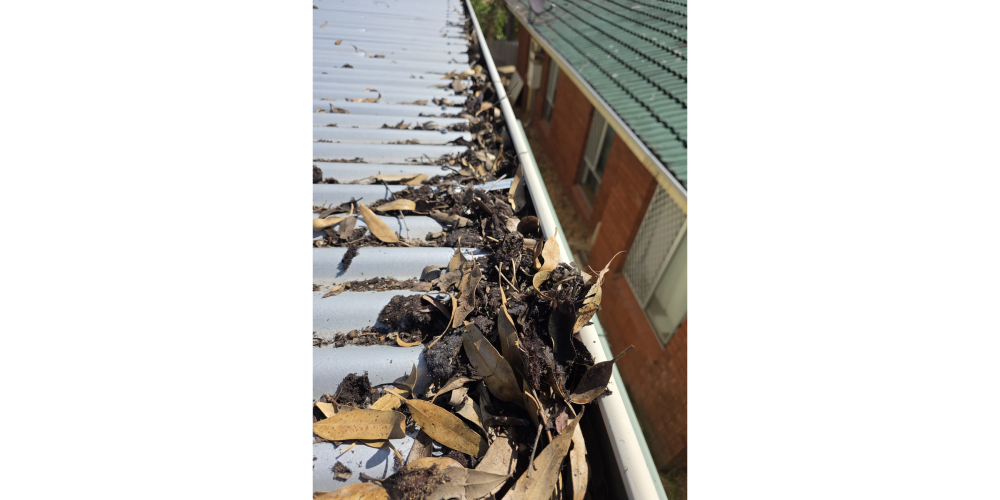
In Western Australia, our long, dry summers (November to March) create a unique maintenance hazard. Dust, bird droppings, and resinous debris from Jarrah and Peppermint trees accumulate in massive amounts. The "First Flush"—the initial heavy rainfall of the season—doesn't just wash this away; it creates a series of technical failures within a building's water-shedding system.
Why the "First Flush" is a Risk for Strata & Commercial Buildings:
- The "Mud" Effect Fine desert dust mixed with light initial rain creates a viscous, high-density sludge. This sludge acts as a binding agent, effectively "cementing" downpipes and reducing flow capacity by up to 80% before the heavy rain even peaks.
- Structural Weight Stress Debris-filled gutters that cannot drain effectively become massive reservoirs. A standard gutter run filled with wet organic matter and standing water can weigh hundreds of kilograms, leading to snapped brackets and sagging profiles.
- Capillary Action & Internal Ingress When external drainage is compromised, water follows the path of least resistance. This often results in "back-flow" into the building’s eaves, ceiling cavities, and electrical systems.
Technical Preventive Measures: A 4-Point Audit
A comprehensive pre-season inspection focuses on the entire water-shedding ecosystem, rather than just surface-level cleaning:
- 1. Mechanical Debris Extraction Complete removal of sediment from gutters and rain-heads to prevent the formation of the "mud" effect during the first rainfall.
- 2. Downpipe & Infrastructure Snaking Verification of the vertical drainage path. Obstructions often occur mid-pipe or at the junction where the downpipe meets the underground storm-water system.
- 3. Thermal Expansion & Sealant Integrity The intense WA summer heat causes building materials to expand and contract, often cracking sealants around vent pipes and flashings, creating "invisible" leak points.
- 4. Sub-Surface Soakwell Assessment The final stage of the system. If the underground soakwell is silted up or at capacity, even the cleanest gutters will overflow during high-volume Perth autumn storms.